Understanding the Basics: Wildcard vs Multi Domain SSL
Wildcard vs Multi Domain SSL certificates often confuse business owners who want to secure their websites effectively. Selecting the right encryption method is vital for building trust with your digital visitors. In today’s digital landscape, cyber threats are constantly evolving. Therefore, you must understand how these two types of certificates differ to make an informed decision. Both options provide high-level encryption. However, they serve very different structural purposes for your web architecture.
Security is no longer optional for any online presence. Specifically, search engines like Google prioritize websites that use HTTPS. Consequently, choosing an SSL Australia solution becomes a strategic business move. Before you purchase, you should evaluate your current domain structure. Do you have many subdomains? Or do you manage multiple distinct domains? These questions will guide your final choice between Wildcard vs Multi Domain SSL solutions.
What Exactly is a Wildcard SSL Certificate?
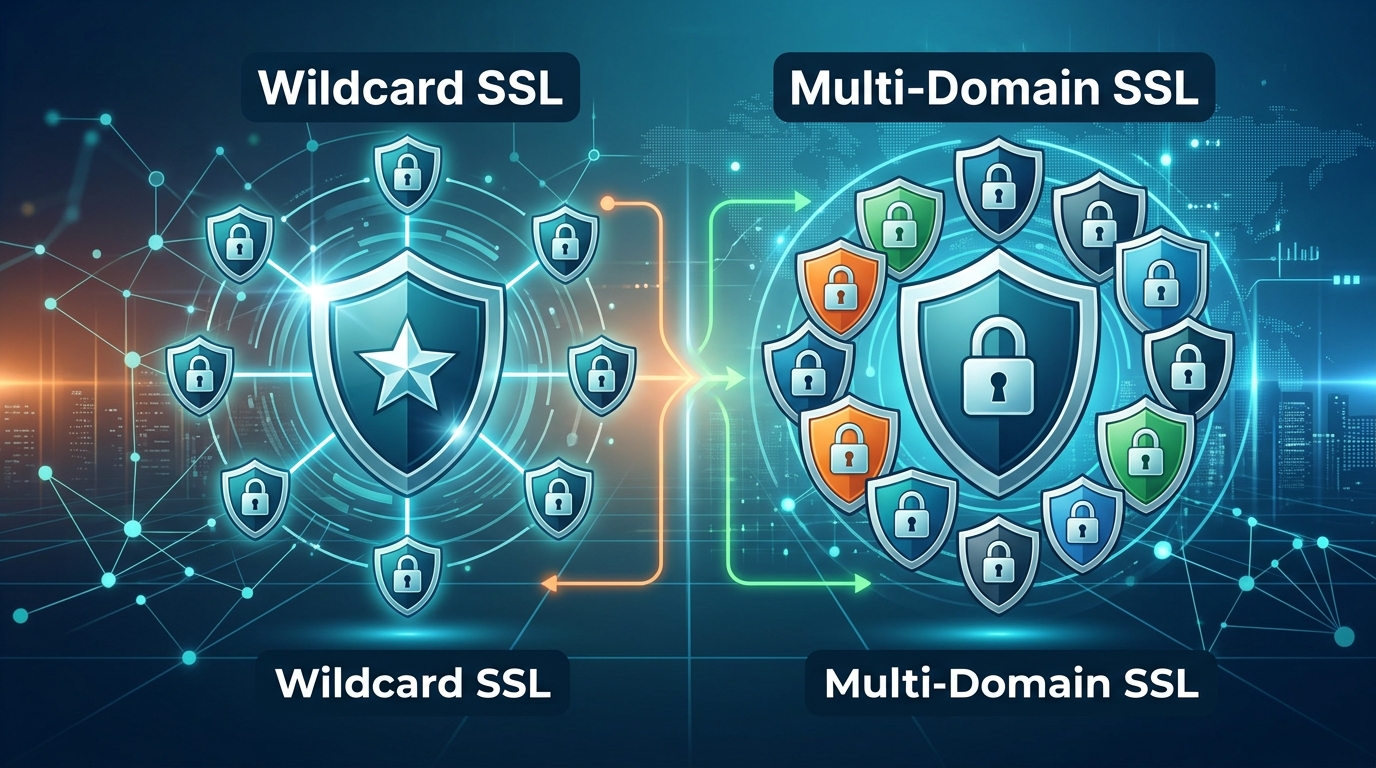
A Wildcard SSL certificate is designed to secure a base domain and an unlimited number of its subdomains. For instance, if you own *.example.com, you can secure blog.example.com, shop.example.com, and mail.example.com. You can do all of this with just one single certificate. This flexibility makes it a favorite for developers who frequently add new sections to their sites. You do not need to reissue the certificate every time you add a new subdomain. This saves a significant amount of time and administrative effort.
However, you must remember that Wildcard certificates only work for one level of subdomains. For example, it will secure login.example.com but not necessarily dev.login.example.com. Most providers offer these certificates with Domain Validation (DV) or Organization Validation (OV). It is important to note that Extended Validation (EV) is not available for Wildcard certificates due to industry security standards. For more technical details on certificate standards, you can visit Wikipedia to understand the underlying infrastructure.
The Power of Multi Domain (SAN/UCC) Certificates
On the other hand, a Multi Domain SSL certificate allows you to secure multiple unique domains under one umbrella. These are often called Subject Alternative Name (SAN) or Unified Communications Certificates (UCC). For example, you can secure example.com, example.net, and mybusiness.com with a single file. This is incredibly efficient for companies that manage a portfolio of different brands. You can easily manage renewals for all your sites at once.
Multi Domain certificates are also highly flexible. You can mix and match different top-level domains. Furthermore, you can even include subdomains as specific entries in the SAN list. Unlike Wildcard options, Multi Domain certificates support Extended Validation (EV). This means you can show the highest level of trust across all your listed domains. This feature is particularly useful for e-commerce businesses that want to maximize conversion rates through visible security signals.
Key Differences: Wildcard vs Multi Domain SSL
The primary difference in the Wildcard vs Multi Domain SSL debate lies in the scope of coverage. A Wildcard certificate is vertical. It covers everything under one root domain. In contrast, a Multi Domain certificate is horizontal. It covers various unrelated domains. This distinction is crucial for your long-term scalability. If you plan to launch dozens of subdomains, the Wildcard option is much more cost-effective.
Additionally, the management process varies between the two. With a Wildcard SSL, you simply install the same certificate on different subservers. You do not need to update the certificate when adding a new subdomain. However, with a Multi Domain SSL, you must usually ‘reissue’ the certificate if you want to add a new domain to the list. While most providers make this process easy, it still requires an extra step. Therefore, you should consider how often your domain list changes before making a purchase.
Scalability and Future-Proofing
When comparing Wildcard vs Multi Domain SSL, think about your growth. A startup might start with a single domain but plan to add several regional subdomains later. In this case, a Wildcard certificate offers seamless growth. You won’t face extra costs as you expand your site’s sections. This makes your budgeting much more predictable. For many, this is the most compelling reason to choose a Wildcard solution for their SSL Certificate Australia needs.
Conversely, a marketing agency might manage several different client domains. Using a Multi Domain certificate allows them to secure all those clients with one administrative point. This reduces the risk of forgetting a renewal date for a specific site. However, the security risk is slightly higher. If the private key is compromised, all domains on that certificate are potentially at risk. Therefore, you must implement strict server security protocols regardless of the certificate type you choose.
Wildcard vs Multi Domain SSL: Which Option Fits Your Business?
Choosing between Wildcard vs Multi Domain SSL depends on your specific use case. Are you running a large platform with user-generated subdomains? If so, the Wildcard SSL is your best friend. It provides the automation and flexibility you need to maintain security at scale. Many SaaS (Software as a Service) providers rely on Wildcards to ensure every new customer gets a secure experience immediately.
Alternatively, does your business operate multiple separate brands like brand-a.com and brand-b.com? In that scenario, a Multi Domain SSL is the superior choice. It keeps your digital portfolio organized and professional. Furthermore, if you need the green address bar or high-assurance EV validation, Multi Domain is your only path forward. You should weigh these functional requirements against your available budget and technical resources.
Why Your SSL Certificate Australia Choice Matters
Local businesses must consider the reliability of their security providers. Choosing a local SSL Certificate Australia provider ensures you get support in your own time zone. Moreover, it helps in verifying your business identity more quickly during the validation process. Whether you go for Wildcard vs Multi Domain SSL, the goal remains the same: protecting your users. Australian customers are increasingly savvy about web security. They look for that padlock icon before entering any personal information.
By investing in a high-quality certificate, you are not just buying a file. You are buying peace of mind for your customers. Consequently, your brand reputation will improve. In the long run, this leads to better customer retention and higher search engine rankings. Always ensure your certificate comes from a trusted Certificate Authority (CA). This ensures universal browser compatibility across all devices and operating systems.
Wildcard vs Multi Domain SSL: Choosing the Right Certificate
In conclusion, the choice between Wildcard vs Multi Domain SSL comes down to your website’s architecture. Use a Wildcard SSL if you have many subdomains under one main domain. Use a Multi Domain SSL if you need to secure several different domains or require EV validation. Both are excellent tools for modern web security. Finally, always keep your certificates updated to avoid any service interruptions. By following these guidelines, you can ensure your online presence remains secure and trustworthy for years to come.